


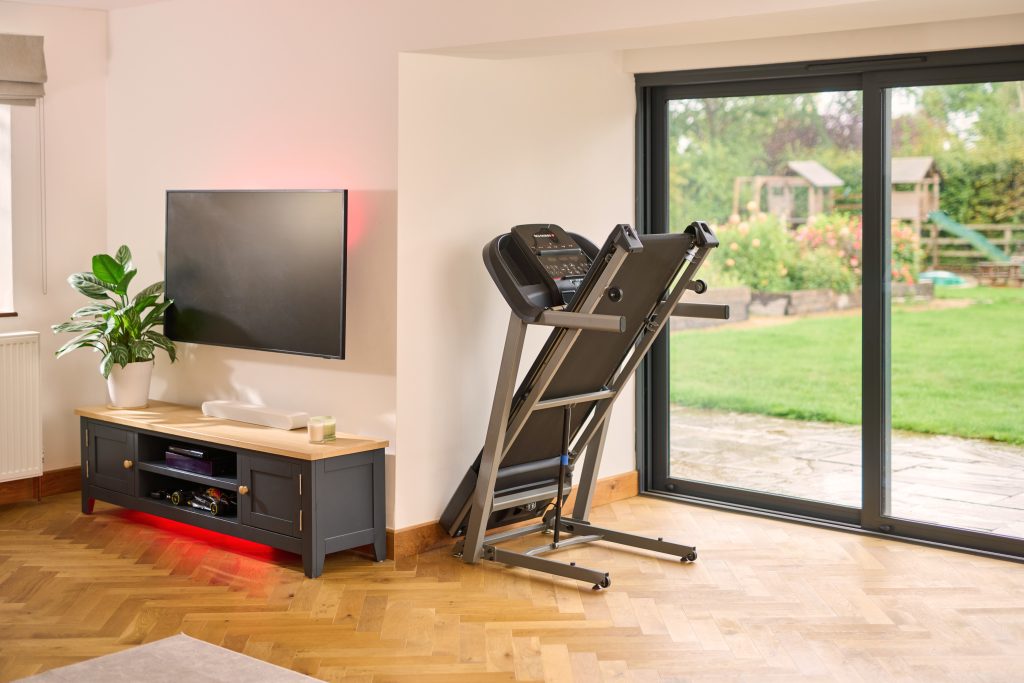
After a long day at work, the sofa and your favorite series feel like a well-deserved reward. Yet, a sense of guilt often follows: you’ve spent the entire day sitting, and now the evening has passed without any physical activity. On the other hand, forcing yourself into a high-intensity workout class when your energy is already depleted can feel like just another chore.
There is an interesting middle ground: exercising while watching something. It’s not a replacement for a serious workout regimen, but rather a clever way to make physical activity feel less demanding and easier to sustain. Let’s take an honest look at what the research says—including the limitations.
What Is “Temptation Bundling”?
This term refers to pairing something you enjoy (“want”) with something that is beneficial for you in the long run (“need”). The rule is simple: you are only allowed to indulge in your favorite entertainment while engaging in a healthy habit.
This concept was tested by Wharton researcher Katherine Milkman and her colleagues. They took 226 university gym members who wanted to exercise more consistently and divided them into three groups. One group was permitted to listen to popular audiobooks only while at the gym. At the start of the study, this group visited the gym 51% more frequently than the control group.
An important note: this effect diminished over time, particularly after the Thanksgiving holiday. Therefore, these findings should be viewed as evidence that combining entertainment with exercise can help initiate and maintain motivation, rather than serving as a guarantee for a permanent habit.
Is It Safe to Exercise While Watching Something?
The answer depends on the type of movement.
- For weightlifting or exercises that require precision—such as those involving dumbbells—it is best to remain fully focused, without a screen.
- For activities like a casual walk on a treadmill or cycling on a stationary bike, the movements are repetitive, stable, and already highly familiar to the body.
A study published in the journal *PLoS ONE* (2023) offers some interesting insights here. In a study involving 20 young adults and 20 older adults, walking on a treadmill while performing a mental task resulted in less brain activity in the frontal region compared to walking normally on the floor, all while task performance remained consistent. The researchers hypothesize that the rhythm of the treadmill makes the act of walking more “automatic.”
Light Exercise or HIIT After Work?
HIIT is not the enemy. The most critical factor is how close the workout is to your bedtime.
A 2021 meta-analysis, which combined 15 studies, concluded that HIIT sessions completed 2–4 hours before bedtime do not disrupt sleep in healthy adults, although there may be a slight reduction in the REM sleep phase. However, if exercise ends less than two hours before bedtime, it tends to take longer to fall asleep. Another review from 2019 reached a similar conclusion: evening exercise generally does not harm sleep, but vigorous exercise finished around an hour before bedtime has the potential to cause disruption.
In practical terms: if your body is already tired and bedtime is approaching, light activity—such as a casual walk while watching something—is a gentler option. If you prefer an intense workout, ensure there is a sufficient gap before you go to sleep.
Better Than Just Lying Around—But Is It Enough?
Prolonged, uninterrupted sitting is not exactly body-friendly. In a small study involving 15 office workers, sitting for four hours reduced blood flow to the brain; taking a light, two-minute walk every 30 minutes helped counteract this. While a very casual walk is beneficial, it may not be enough on its own. The WHO recommends 150–300 minutes of moderate-intensity physical activity per week for adults—defined as activity that makes your breathing faster, while still allowing you to hold a conversation. Think of exercising while watching TV as a comfortable entry point; you can gradually increase the speed or incline as the habit takes root.
In practice, the comfort and quality of your equipment play a major role in how sustainable this routine becomes. A vibrating deck, a noisy motor, or jerky pedals can easily break your concentration and diminish the enjoyment of what you’re watching. This is a common user experience. Therefore, equipment with smooth shock absorption and a near-silent motor makes for an ideal companion while you watch. It operates quietly in the background, ensuring that dialogue and subtitles remain clear and legible without disturbing family members or neighbors—an especially important feature in closely situated homes.
Exercising while watching TV is more than just an excuse, though it isn’t a universal solution for everything. It is a practical way to integrate physical activity into your leisure time. With the support of stable, quiet equipment, this habit can shift from feeling like a burdensome chore into a daily moment you actually look forward to.
Disclaimer: This article is for general educational purposes only and is not a substitute for professional medical advice. If you have any specific health conditions, please consult with a doctor before beginning a new exercise program.