

Plenty of people buy a treadmill or exercise bike with the best of intentions: to live a healthier life. But a few months later, what shows up instead are complaints of sore knees, aching lower backs, or stiff shoulders. The equipment that was supposed to support fitness ends up becoming a new source of problems.
The cause is rarely as simple as “bad technique.” In many cases, the root of the problem lies in the equipment’s design itself—specifically, how well its construction accounts for human biomechanics. Here are several critical factors worth understanding before setting up a personal fitness space at home.
The Danger of Treadmills Without Proper Shock Absorption
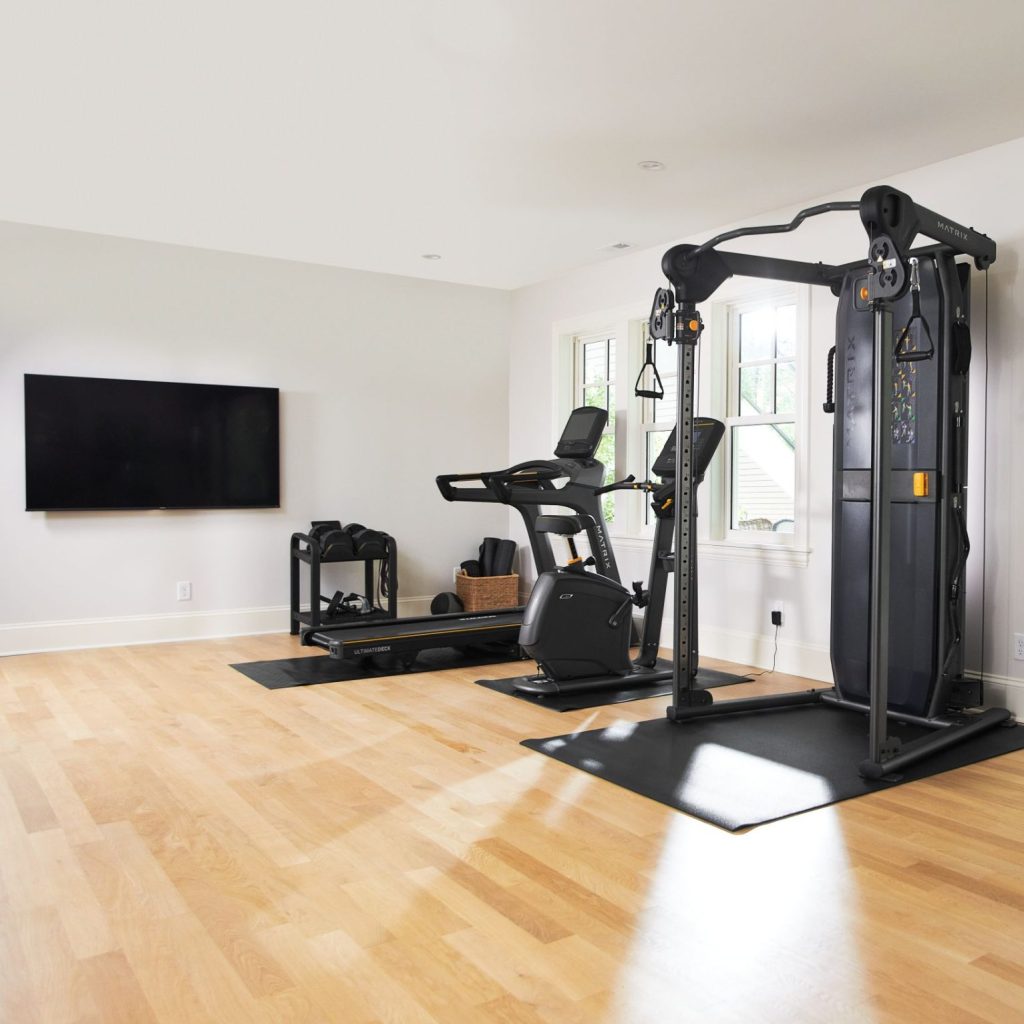
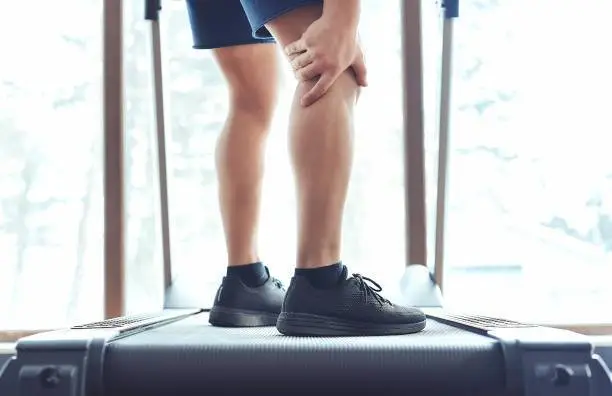
Every time a foot strikes the ground while running, the body absorbs an impact force far greater than its own body weight. Sports biomechanics research consistently shows that this impact force typically falls somewhere between 1.5 and 3 times body weight, depending on running speed and measurement method. In other words, someone weighing 70 kg may be absorbing an impact of over 200 kg with every stride.
On a treadmill with a rigid deck surface, most of that impact energy isn’t absorbed—it’s reflected straight back into the ankles, knees, and lower back.
- A treadmill designed with biomechanics in mind must have a suspension (cushioning) system that absorbs that energy.
- The difference is much like running on concrete pavement versus a cushioned athletic track—the impact on your joints is significant when done regularly.
The Risk of Inconsistent Cable Resistance on Home Gym Machines
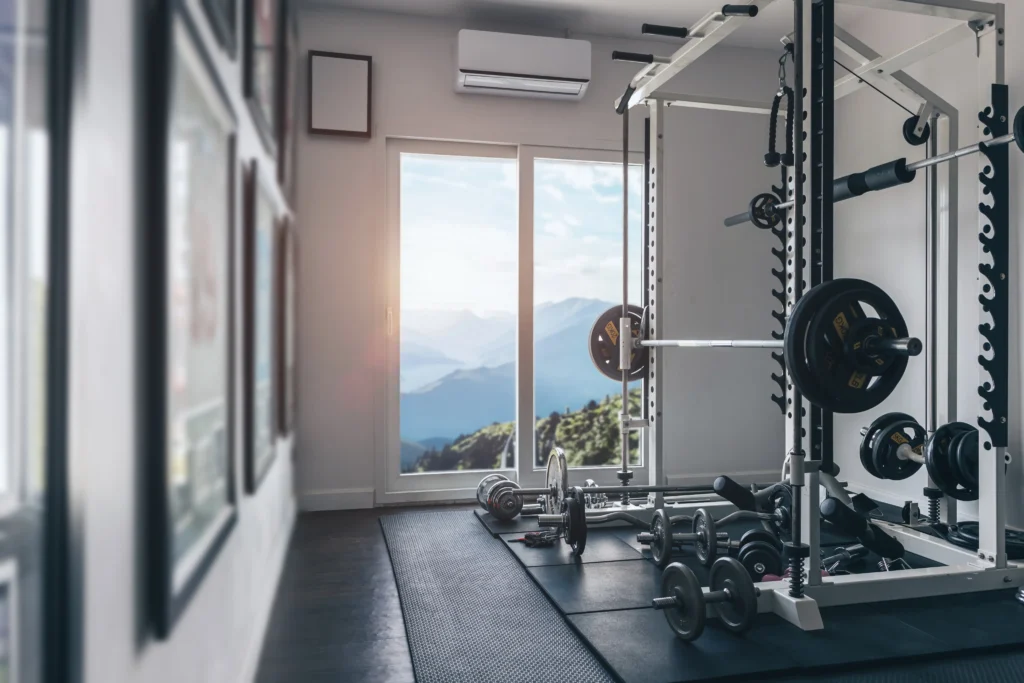
On cable machines or home multi-gyms, users often notice inconsistent resistance throughout a movement—heavy at the start, then suddenly light near the end. This isn’t just a comfort issue; it’s a mismatch with human anatomy.
Human muscles have a natural strength curve: stronger at certain angles, relatively weaker at others.
- A well-designed resistance machine typically uses a cam system (not just a simple round pulley) to match the equipment’s resistance curve to the body’s natural strength curve.
- When cable resistance is unstable, small stabilizer muscles (such as those around the shoulder and rotator cuff) are forced to work overtime to control unpredictable shifts in load. Over the long term, this pattern can contribute to muscle strain or tendon inflammation.
Sizing That Doesn’t Match Your Body: Q-Factor and Load Distribution
Physical dimensions that don’t match a user’s body proportions are another hidden risk.
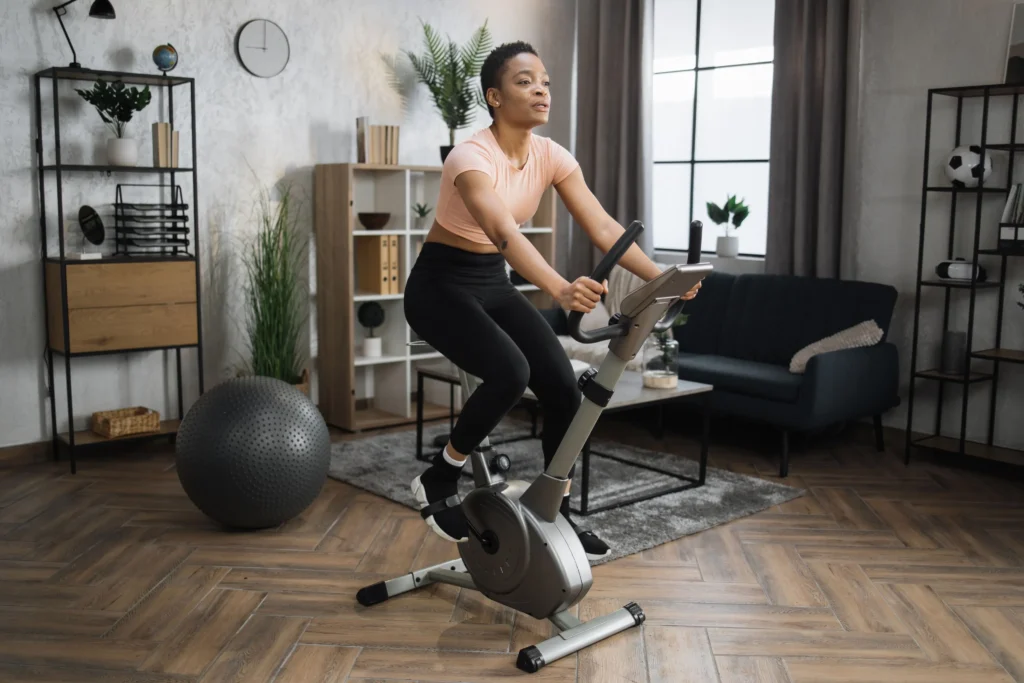
- Exercise bikes: The horizontal distance between the pedals is known as the Q-factor. If this distance is too wide and doesn’t suit the rider’s hip anatomy, the knees are forced to pedal at an angled path. Sports medicine literature often examines this as one contributing factor to lateral knee pain in cyclists, though it’s rarely the sole cause.
- Adjustable dumbbells: If the locking mechanism doesn’t distribute weight precisely at the center point, the wrist ends up absorbing extra torsional (twisting) load with every lift. While this doesn’t automatically cause carpal tunnel syndrome, repetitive movement with an off-center point of gravity clearly accelerates wrist tendon fatigue.
Stability and the Muscle Response You Don’t Notice
A bike frame that wobbles slightly, or a treadmill deck that vibrates at higher speeds, gets registered by the central nervous system as a threat to balance.
As a protective response, the core and back muscles reflexively tense up to maintain stability. The result: the body’s focus gets divided. Instead of training the intended muscle group, the body ends up fatigued from constantly balancing itself. This is why a machine’s frame stability matters far more than its touchscreen or entertainment features.
Two Other Critical Factors Home Users Often Overlook
- Assembly risk. Reports from the U.S. Consumer Product Safety Commission (CPSC) regularly document injuries caused by assembly errors—loose bolts, incorrectly installed pulleys, or miscalibrated initial settings. This risk climbs sharply when fitness equipment is bought online and self-assembled without help from a professional technician.
- Maintenance in a tropical climate. Mechanical equipment in hot, humid climates faces extra challenges. Lubricant on a treadmill deck can dry out faster, and metal components that aren’t regularly wiped down after sweat exposure become far more prone to corrosion (rust). Equipment that’s perfectly safe on day one won’t automatically stay that way three years later without a clear maintenance schedule.
Making Smarter Choices, Not Avoiding Exercise
Understanding these risks isn’t meant to discourage you from exercising at home. On the contrary, this understanding equips you to be a more critical consumer when investing in your health.
Before you buy, ask the basic questions that often get overlooked: Has this equipment been tested for biomechanical soundness? How stable is the frame under maximum load? And is professional technician support available for assembly and maintenance? The answers to these questions will determine whether the equipment in your home truly builds strength—or quietly stores up risks you never noticed.