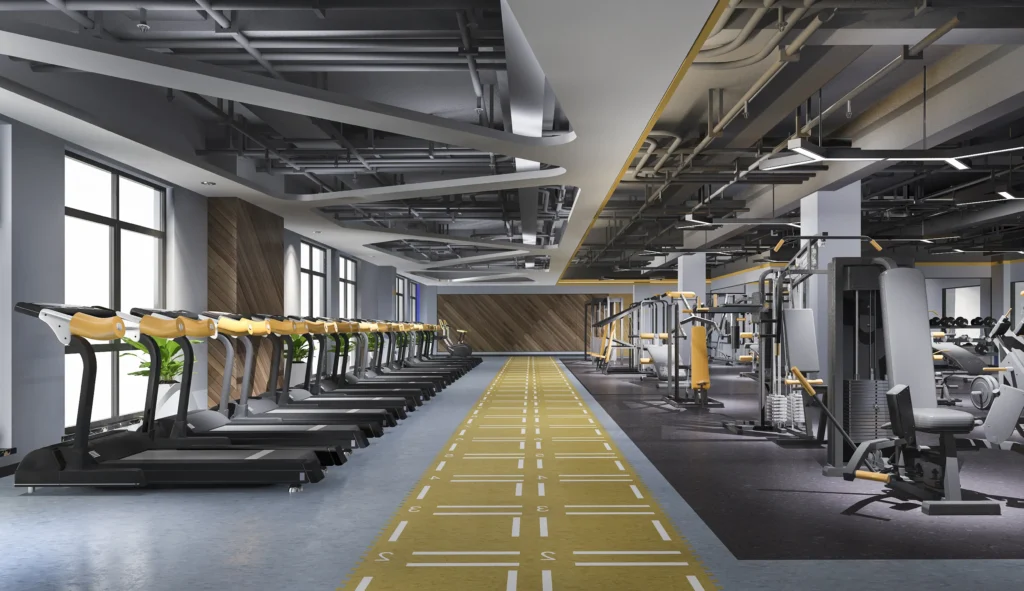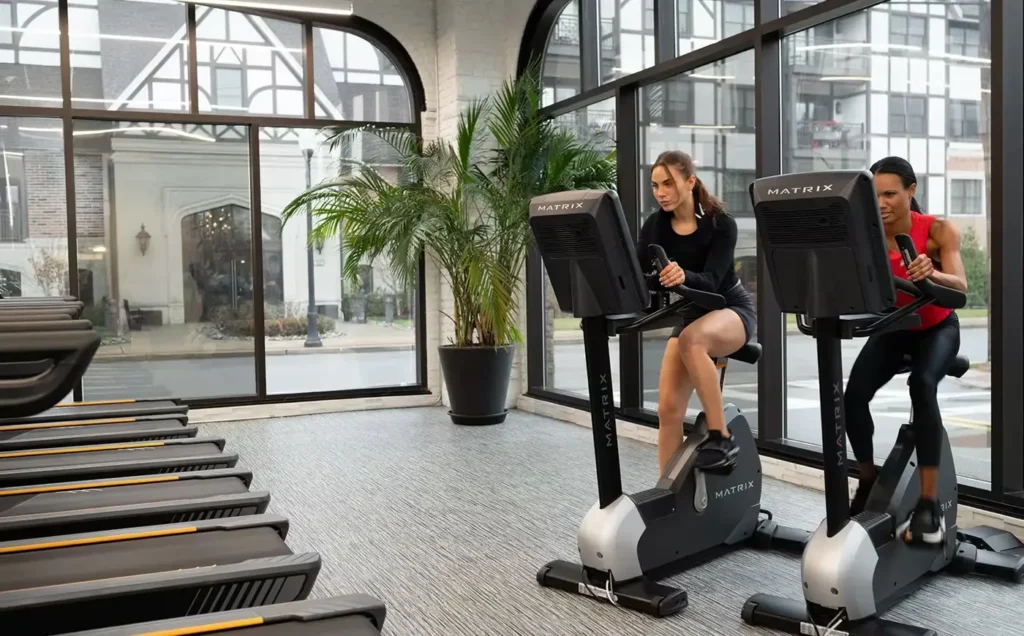


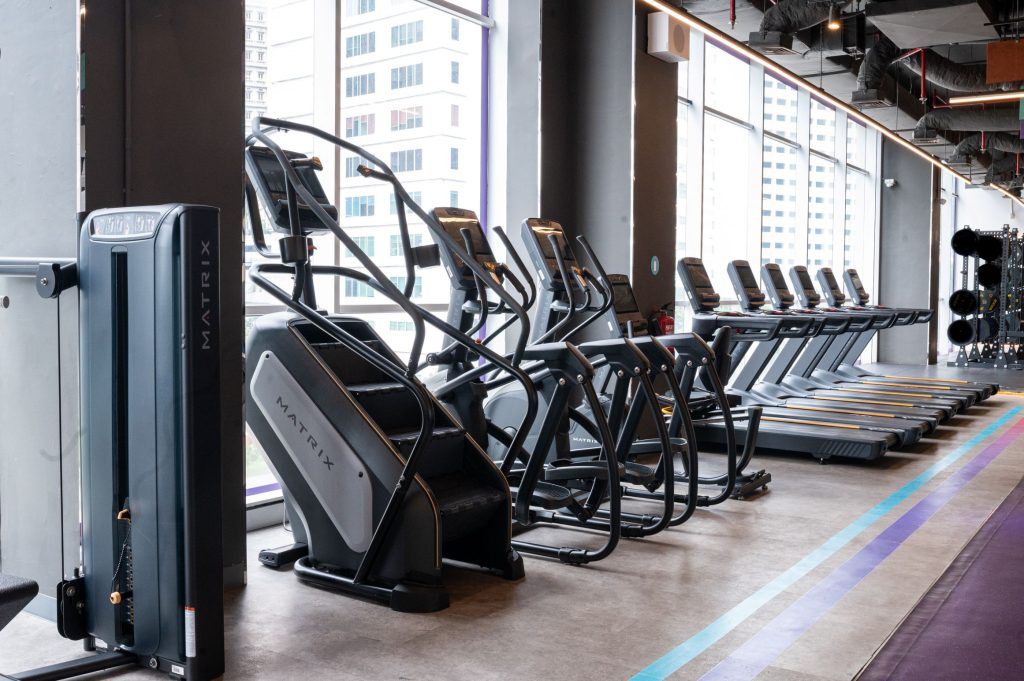
There is a significant difference—often overlooked—when a business procures commercial-grade fitness equipment. The mindset applied is often that of an individual consumer, yet the consequences differ vastly. If a home treadmill breaks down, the impact is merely personal inconvenience; one can simply run outdoors while waiting for a technician. However, if the same breakdown occurs in a commercial facility—such as a hotel, apartment complex, or large gym—it immediately translates into operational disruption and reputational risk. Here are four points worth reconsidering before signing a procurement contract, ensuring your investment delivers genuine certainty rather than just promises on paper.
1. Different Between Warranty Promises and SLA (Service Level Agreement)
During negotiations, the phrase “includes an official warranty” is often reassuring. However, a warranty and a vendor’s ability to rapidly resolve issues on-site are two distinct matters—a distinction most people only realize after the equipment actually breaks down, rather than while at the negotiating table.
A warranty is essentially a financial promise: if a breakdown occurs, the vendor will replace components at no extra cost. Yet, a warranty makes no guarantees regarding when the equipment will be operational again. Speed and time-bound commitments for resolution are governed by a different document: the Service Level Agreement (SLA). For facilities requiring equipment to be constantly ready for use, a ten-year warranty is of little value if it takes two weeks just to get a technician on-site; what matters more is the guaranteed maximum timeframe for a technician’s arrival and the resolution of the issue.
Therefore, the more incisive question to ask a vendor is not “Is there a warranty?”—as almost all vendors will answer “yes.” A more useful question is: “What is the guaranteed maximum time—in writing—between the submission of a damage report and the technician’s arrival on-site, and what are the consequences if that target is missed?” Vendors with a clear SLA can usually provide a specific figure without hesitation. Vendors offering only a standard warranty without an operational SLA typically provide vague responses—such as “as soon as possible” or “subject to technician availability.” While these answers may sound reasonable during negotiations, they offer no real assurance when a problem actually arises.
2. The Domino Effect of Downtime on Overall Satisfaction
The impact of a broken piece of equipment depends heavily on *when* the breakdown occurs. A treadmill breaking down at 3:00 AM in an empty facility has a negligible impact. However, that same treadmill breaking down at 7:00 AM on a weekday—when the cardio area is packed and people are waiting—creates repercussions far beyond the failure of a single unit. Queues grow, and the negative experience ripples out to affect everyone whose schedule is disrupted by that single malfunction.
There is an interesting psychological explanation for why this effect feels more severe than anticipated. In his work “The Psychology of Waiting Lines” (published by Harvard Business School), David Maister explains that unexplained or unexpected wait times feel significantly longer—and trigger far greater frustration—than identical wait times accompanied by a clear prior explanation. This means that a piece of equipment suddenly marked “Out of Order” without explanation during peak hours can damage the perception of comfort far beyond the immediate users directly affected. In the hospitality industry, in particular, such experiences often lead directly to negative reviews that influence future guests.
This is why an SLA based on standard office hours can become a major issue that remains hidden during negotiations. Many vendors structure their SLAs around standard business hours, whereas hotel gyms and fitness centers often operate for much longer periods—sometimes 24 hours a day. Their peak usage times frequently fall outside typical office hours: early mornings before work, evenings after work, or weekends. An SLA promising a response “within 24 business hours” might technically be met while still leaving the broken equipment out of commission through several peak usage periods before it is actually addressed.
3. Equipment Standardization – Key to Maintenance Efficiency and Expansion Planning
Unlike individual purchases—which are typically retail and sporadic—commercial-scale procurement involves an often-overlooked consideration: consistency in the equipment types and series used. When a facility manages dozens of units, an excessive variety of brands or production series becomes a burden for the maintenance team; they must master numerous repair protocols, and managing spare parts inventory becomes more complex and costly.
This is also relevant for long-term planning, particularly for businesses intending to expand to new locations. A crucial question to consider is: if you purchase a specific equipment series for your first location today, will that same series—or an equivalent—still be available and supported with spare parts when you expand to a second location years down the line? Such consistency simplifies operations: internal technical teams need only master a single repair protocol, and users at any location enjoy a consistent experience when using the same equipment.
4. Anticipating Digital Obsolescence in Modern Fitness Equipment
There is a form of obsolescence distinct from mere physical wear and tear: equipment that remains mechanically sound but whose digital systems or software are no longer updated. For modern fitness equipment featuring integrated screens, connectivity, or data tracking, reliance on long-term software support is a factor rarely considered during purchase, yet its impact becomes significant after a few years.
This warrants attention. A piece of equipment may retain immense mechanical value—with a powerful motor and a sturdy frame—yet feel obsolete because its digital features are no longer updated or its supporting apps are incompatible with the latest devices. For facilities whose reputation relies partly on a modern, up-to-date image, this type of obsolescence can shape guest perceptions, even if the equipment functions perfectly at a basic level.
Here are some questions to help avoid premature obsolescence: how long does the manufacturer typically provide software updates for a product generation after the successor model has been released? Will the equipment’s basic mechanical functions remain usable if software support is eventually discontinued? And regarding physical components integrated with digital systems—such as sensors or control panels—how long is the availability of spare parts guaranteed after the model’s production ends? Vendors who provide clear, specific answers to these questions have typically given thorough consideration to their product lifecycle. Conversely, vague or defensive responses often signal that the risk of premature obsolescence has not been properly addressed, let alone proactively communicated to the buyer.
Warranties versus SLAs, domino effects during peak hours, equipment consistency, and the risk of digital obsolescence—these four factors share a common trait: they are not immediately apparent when the equipment is brand new and operating smoothly on day one. Their impact only becomes tangible months or years down the line: when the equipment first breaks down during peak hours, when expansion plans are set in motion only to find the specific model is no longer available, or when digital features that were once key selling points begin to feel outdated. Asking specific questions about these four areas during the negotiation phase—rather than waiting for problems to actually arise—often distinguishes a fitness equipment investment that offers true operational longevity from one that becomes a source of recurring issues.